Last Updated by the Serious Play Business Content Team on 14 October 2025.
In many workplaces, psychological strain is invisible until it breaks something — motivation, trust, or health. The 2025 AHRI report on Managing and Minimising Psychosocial Risks confirms what leaders already sense: burnout, role overload, and poor connection aren’t individual weaknesses — they’re systemic blind spots. Teams operate under increasing pressure to deliver more with less, often within organisational cultures that reward output over wellbeing. Yet most safety frameworks remain abstract: spreadsheets of hazards, compliance checklists, and HR audits that feel detached from lived experience.
Summary: You can’t manage what you can’t see. LEGO Serious Play helps teams visualise hidden psychosocial risks before they become cultural fractures.
Beyond Policy: Turning Risk Into Dialogue
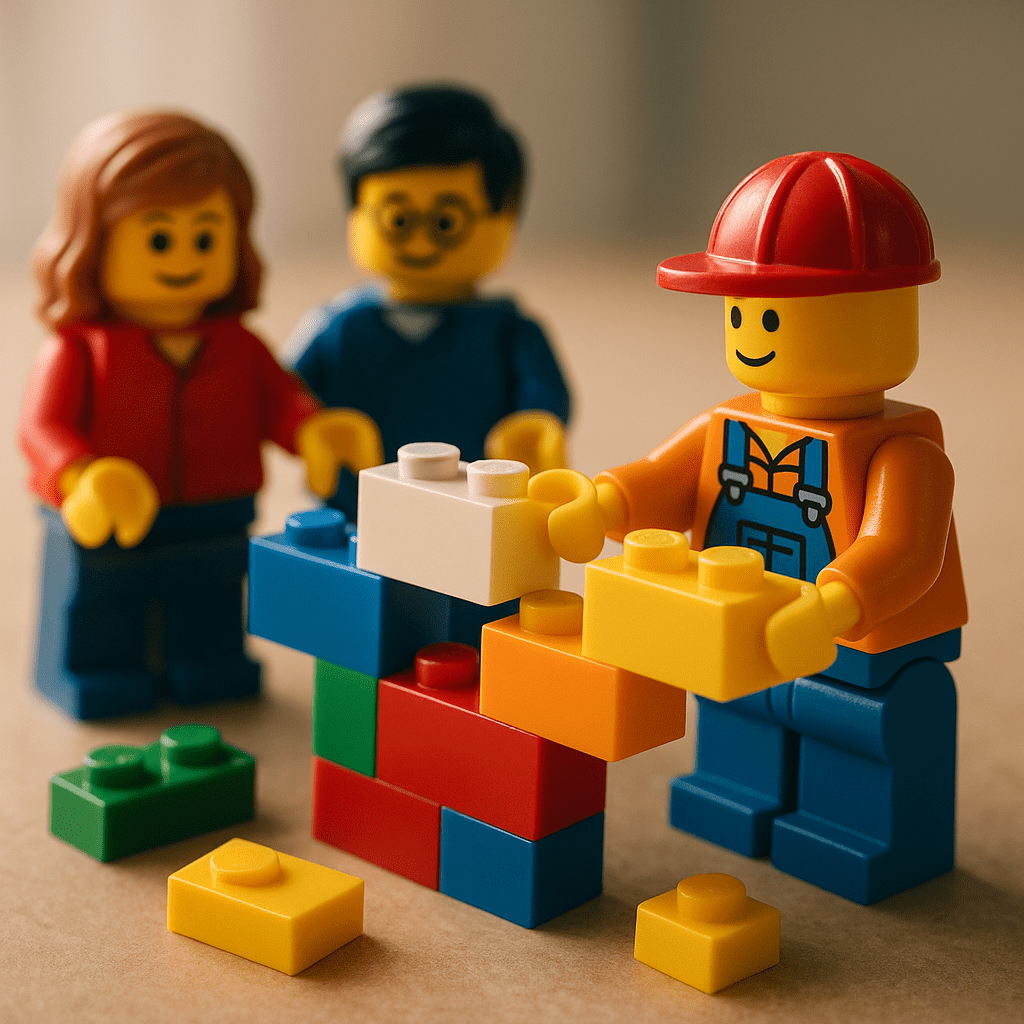
Policies may meet compliance standards, but they rarely create emotional safety. People open up when they feel seen, not when they’re audited. In a facilitated LEGO Serious Play session, participants build models representing the pressures, demands, or blockers in their daily work. A tower might symbolise unrealistic workload; a wall might stand for communication barriers; an isolated brick could represent disengagement or loneliness.
The facilitator then guides structured storytelling around these metaphors, creating what researchers call “psychological distance with emotional honesty.” People speak through the model — not from personal defence. That simple shift changes everything: sensitive topics become accessible, complex relationships become visible, and shared ownership of wellbeing begins to form.

The Science of Safe Expression
The AHRI report highlights the need for “shared understanding between leaders and employees to identify, assess and control psychosocial risks.” Neuroscience backs this up: when we manipulate physical objects to describe intangible experiences, the motor cortex and prefrontal cortex co-activate, increasing clarity and empathy. This is embodied cognition in practice. In psychosocial-risk workshops, it translates into:
- Emotional Regulation: Building diverts focus from threat response, reducing anxiety.
- Shared Meaning-Making: Everyone’s contribution becomes part of the model, creating safety through inclusion.
- Actionable Insight: Abstract stressors turn into visible systems that teams can redesign collaboratively.
Building a Culture of Prevention
The AHRI framework positions prevention — not reaction — at the heart of psychosocial-risk management. LEGO Serious Play helps organisations move from reporting to re-imagining:
- Mapping organisational stressors as systems, not symptoms.
- Designing preventive practices like recognition rituals or communication norms.
- Embedding reflection cycles into ongoing meetings, not one-off interventions.
When teams model their environment together, risk assessment becomes a creative act, and compliance transforms into culture.

Our New Research on AI & Creativity
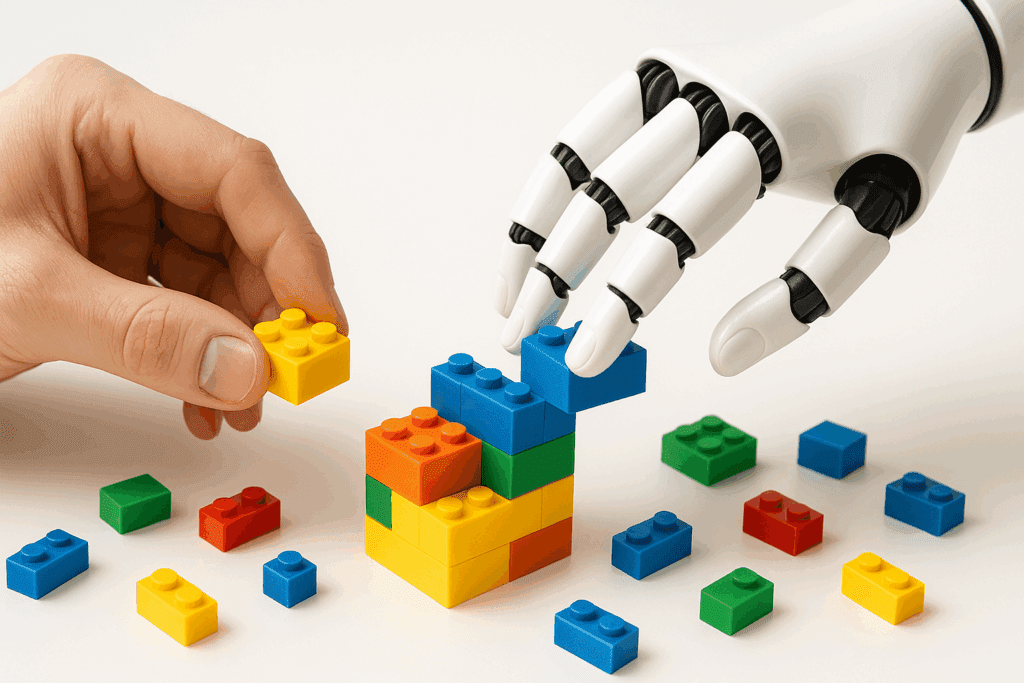
Read our newly published article in the Springer ETHICOMP 2025 Proceedings: “How AI is Reshaping Creativity in LEGO® SERIOUS PLAY®”.
Read The Full Article